
What Is vRP? The Complete FiveM Framework Guide

Long before QBCore and Qbox, there was vRP - vRP stands for the Virtual Roleplay framework. It is one of the oldest and most widely deployed FiveM roleplay frameworks, and it still runs thousands of servers today. If you have searched 'FiveM framework' and only seen ESX and QBCore, you are missing a mature option. Here is what vRP is, why people still use it, and how it compares to the frameworks everyone talks about.
What Is vRP, Exactly?
vRP (virtual RolePlay) is a Lua-based FiveM framework that builds a complete roleplay economy around a simple, data-driven model. It provides the essentials out of the box: a job system, an inventory, money and banking, a basic vehicle system, IDs and a police/EMS framework, and a modular structure you extend with extra resources. Historically it ships with an HTML-like panel (vRP) and a GUI, and it was especially popular in the European and South American RP scenes. It is compact, config-driven, and does not require the sprawling addon ecosystem that some frameworks do, which makes it appealing for servers that want a lean start.
How vRP Compares to ESX, QBCore, and Qbox
ESX is huge, modular ('extended'), and has the largest script library but is heavier and older. QBCore is the modern community favorite - accessible, fast to learn, with tons of free, well-documented scripts. Qbox is a QBCore fork rebuilt around OX resources for the newest take. vRP sits differently: it is older, more opinionated, and uses its own conventions, so there is less modern, high-quality script content for it than for QBCore. The upside is that a vRP server is very configurable and feels 'everything included'. The trade-off is a smaller developer ecosystem and a learning curve that does not transfer to the QBCore/ESX tutorials everyone uses. For a pure roleplay experience with custom needs, vRP can be excellent; for fast community building with free resources, QBCore or Qbox usually wins.
Installing and Configuring vRP
Like any framework, the flow is: deploy your FiveM server (txAdmin pre-installed), clean the file tree, drop the vRP base resources into your resources folder, import the vRP database (the provided .sql via phpMyAdmin/Heidisql), then add 'ensure vrp' (and its dependencies) to server.cfg. Fill in your database credentials in the vRP config (host, port, user, password, database), set 'sv_maxclients' for your slots, then start and load in to verify jobs, inventory, and banking work. Because vRP is self-contained, there are fewer moving parts than ESX - but that also means you rely on vRP-specific scripts for extras, so check the compatibility of any script you plan to add before committing.
vRP vs QBCore: Which Should You Choose in 2026?
Choose vRP if: you want a complete, opinionated roleplay base with little assembly, you have a clear custom vision, or you already run vRP and it is stable for your community. Choose QBCore or Qbox if: you are starting fresh and want easy onboarding, you want modern free scripts, or you expect to scale and iterate quickly - the ecosystem and tutorials are far deeper. In practice, new servers in 2026 overwhelmingly pick QBCore or Qbox; vRP remains a solid choice for established servers that prefer its design. The important thing is not to force a migration for its own sake - a well-run vRP server is better than a poorly-run QBCore one.
Hardware and Performance for vRP
Because vRP is lightweight, you can run a 32-slot server comfortably on 4 GB RAM with 3 CPU threads and NVMe. For 64 slots with many active scripts, step up to 8 GB and 4-6 threads. As with any framework, budget for your real slot count rather than your ambition: under-provisioning causes disconnects and crashes during peak hours. FiveM benefits from multi-threading, so more cores help when you run many scripts, but the main game thread still rewards a fast single core. Host on a plan that pairs modern RAM with a high-clock CPU and NVMe storage - that combination is what keeps 20-plus roleplay players in one city smooth.
vRP is a mature, self-contained FiveM roleplay framework that still powers thousands of servers. It offers an all-in-one, config-driven roleplay base with a distinctive feel, but it trades that for a smaller script ecosystem than QBCore or Qbox. Use it if its design matches your vision - particularly if you value a lean, complete foundation - and skip it if you want maximum modern scripts and community support. Whatever you pick, shave the guesswork out of the hardware: fiveM plans with a real CPU, DDR5 RAM, NVMe, and a ready database make the framework decision the only thing you have to think about. CyberNex FiveM hosting deploys vRP, QBCore, Qbox, and ESX bases in one click, with txAdmin and DDoS-protected global nodes.
Ganidu Sathishka
Support EngineerGanidu is a technical support engineer at CyberNex who helps customers deploy and configure their game servers. He creates beginner-friendly setup guides and troubleshooting tutorials based on common customer questions.
CredentialsTechnical support engineer at CyberNex with 4+ years helping customers deploy and configure game servers. Expert in troubleshooting FiveM, Minecraft, and Discord bot hosting issues across Linux and Windows environments.
More in fivem
How to Create a FiveM Server globally - Complete Guide
12 min read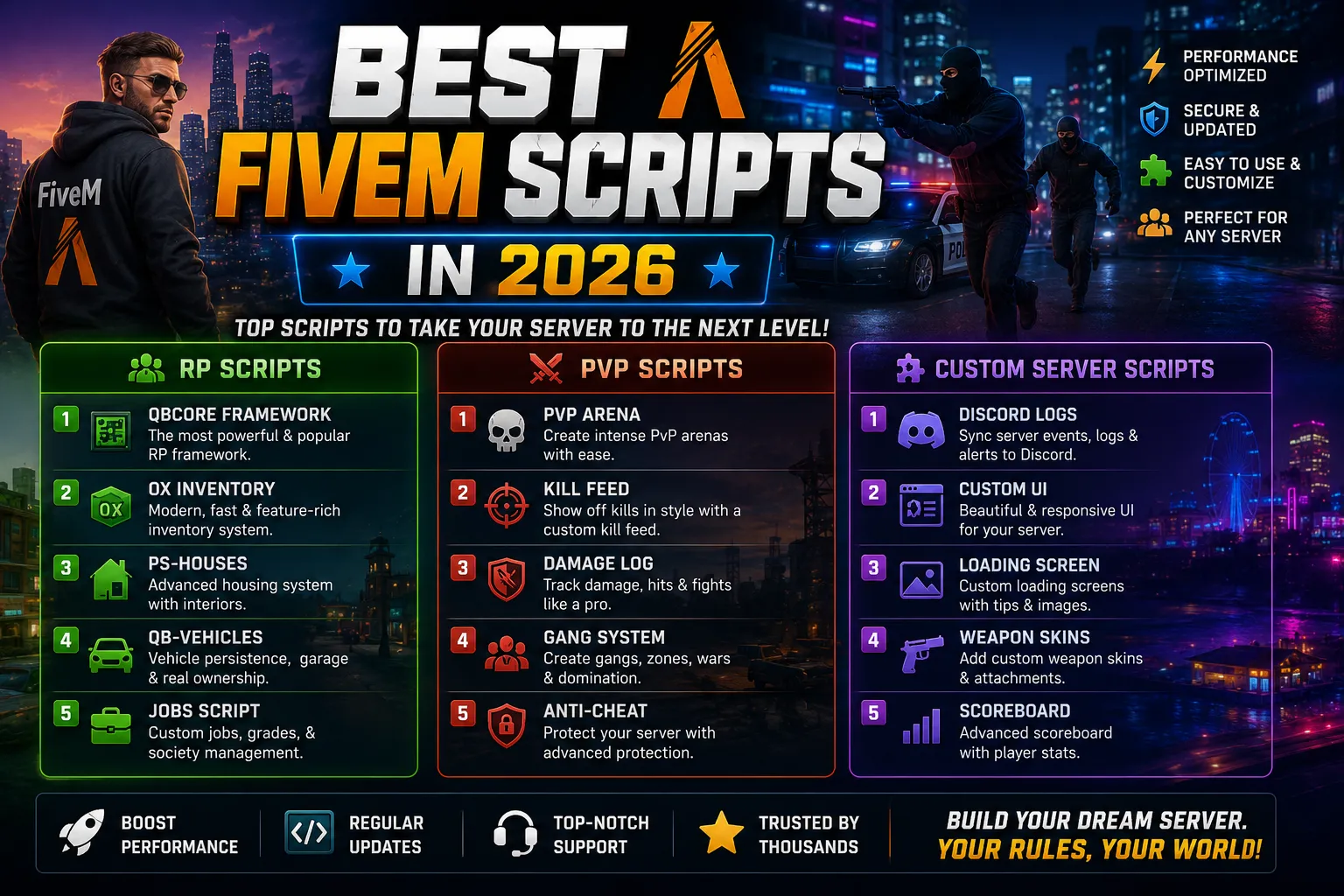
Best FiveM Scripts in 2026 for RP, PvP, and Custom Servers
9 min read
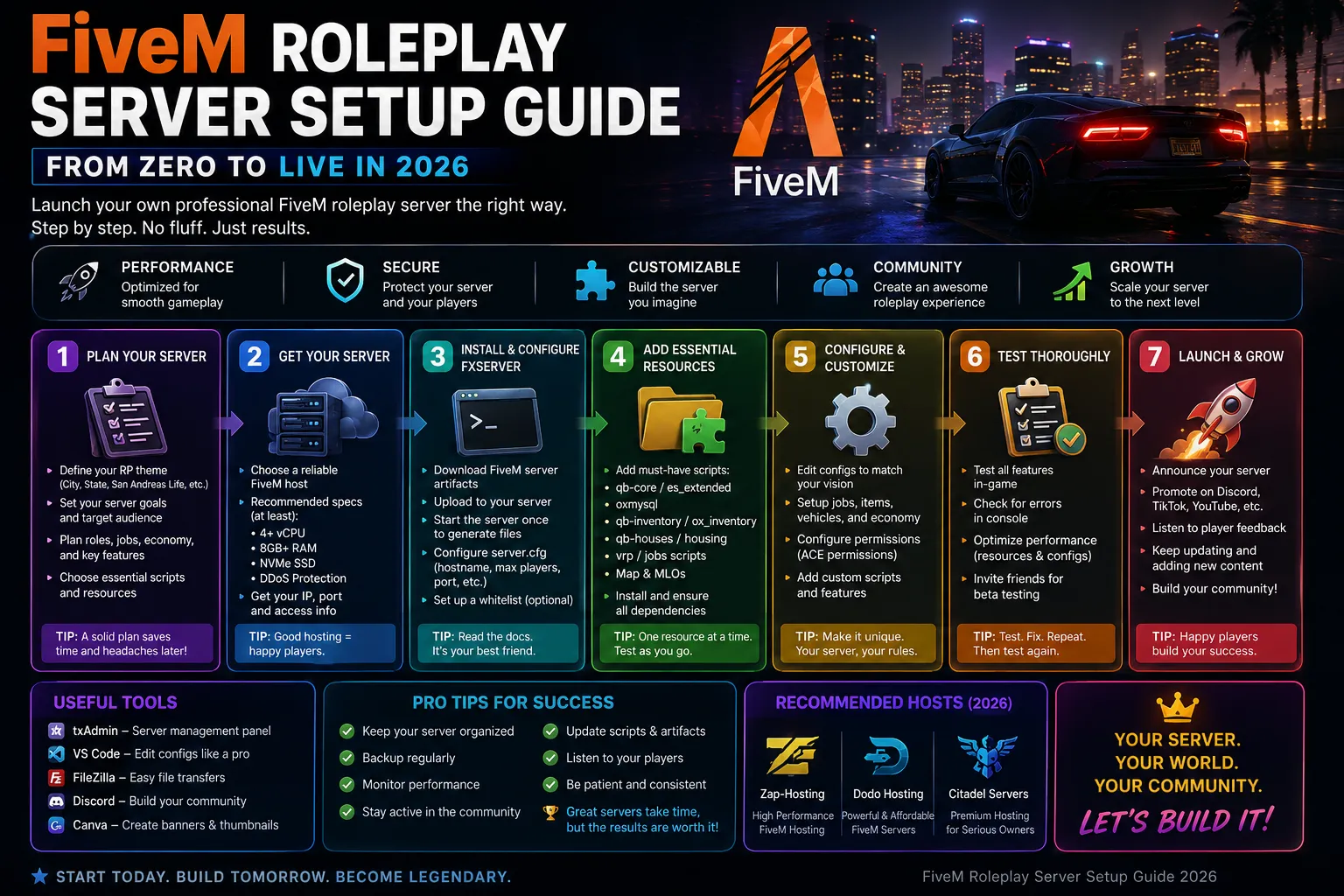
FiveM Roleplay Server Setup Guide - From Zero to Live in 2026
14 min readFiveM Server Hosting
Launch your FiveM server with txAdmin pre-installed. ESX, QBCore, Qbox, vRP, with DDoS protection and a ready database.